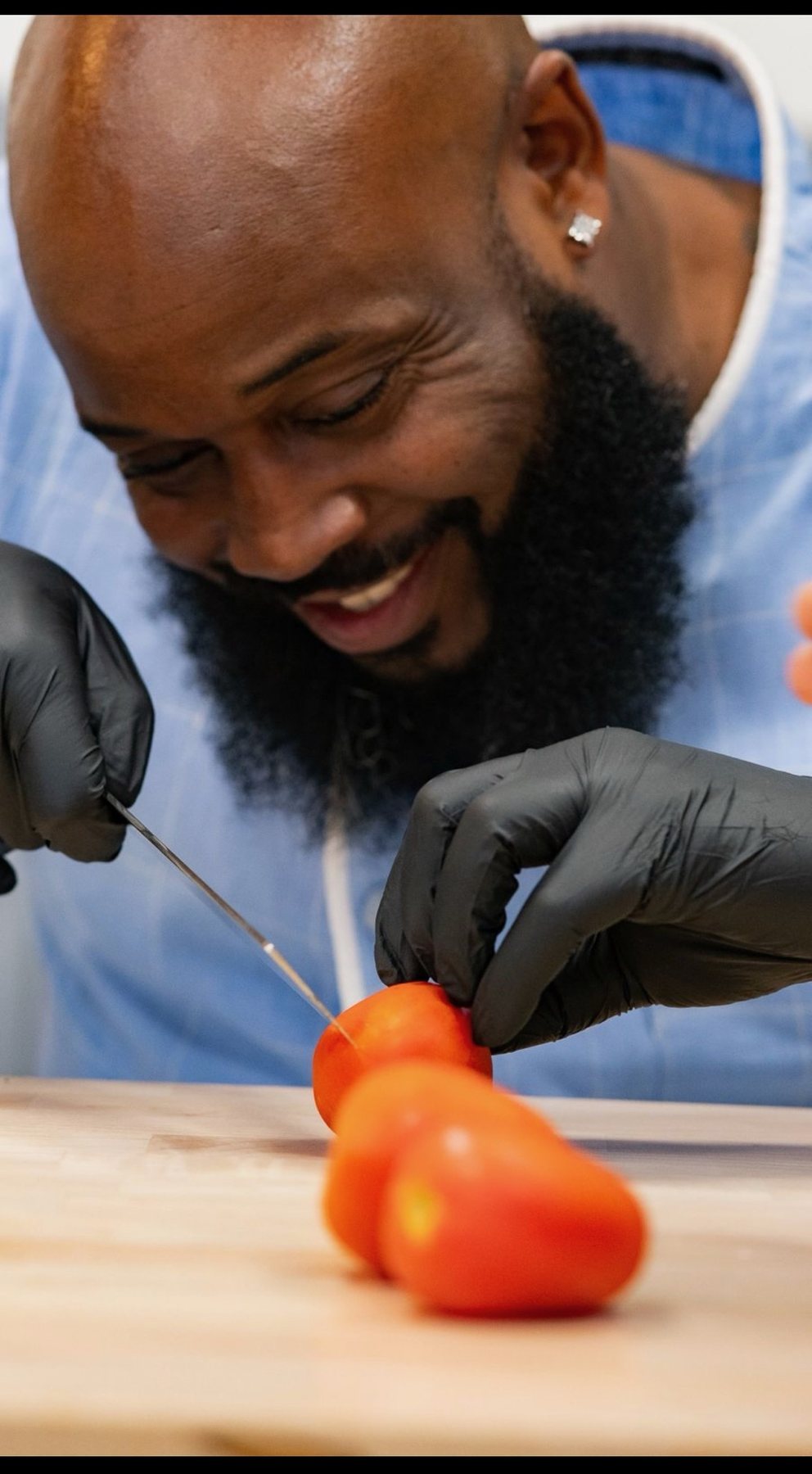
The culinary masterclass
A limited engagement. Hands-on private instruction in the techniques and principles behind the cooking his clients book him for.
Not a demonstration. You cook.
Most cooking classes are a performance with a tasting at the end. This is not that. You are at the board with a knife in your hand, and the corrections come while you are making the mistake, not afterwards.
The class is built around principles rather than recipes — how to build a sauce that holds, why the pan temperature matters more than the timer, how a plate is composed so it reads as considered instead of crowded. Take those away and the recipes become optional.
It works as a gift, as a team-building session that people actually enjoy, and as a real lesson for someone who cooks already and wants to get better.

What a class includes
Sourced and prepped before you arrive.
Every guest cooks. Nobody watches from a stool.
Knife work, heat control, seasoning and sauce structure.
You sit down and eat it, properly plated.
Sent afterwards so the class does not evaporate.
Held at home, at your office, or at a partner space.
Booking a class
- Choose your group
One to twelve. Smaller groups get more of his attention.
- Pick a focus
Knife skills, sauces, seafood, plating, or a full menu from start to finish.
- Confirm the space
Your kitchen, an office, or a venue he arranges.
- Deposit and date
Classes are limited, so the date is held on deposit.
- Prep before you arrive
Ingredients sourced and stations set so class time is spent cooking.
- Cook, plate, eat
Two to three hours, then you sit down to what you made.
One format. Focus is chosen with you when you book.
- Knife work and heat control
- Worked through on real product, not drills
- Crab cake, red quinoa, roasted pepper and mango coulis
- Sauce structure and seasoning
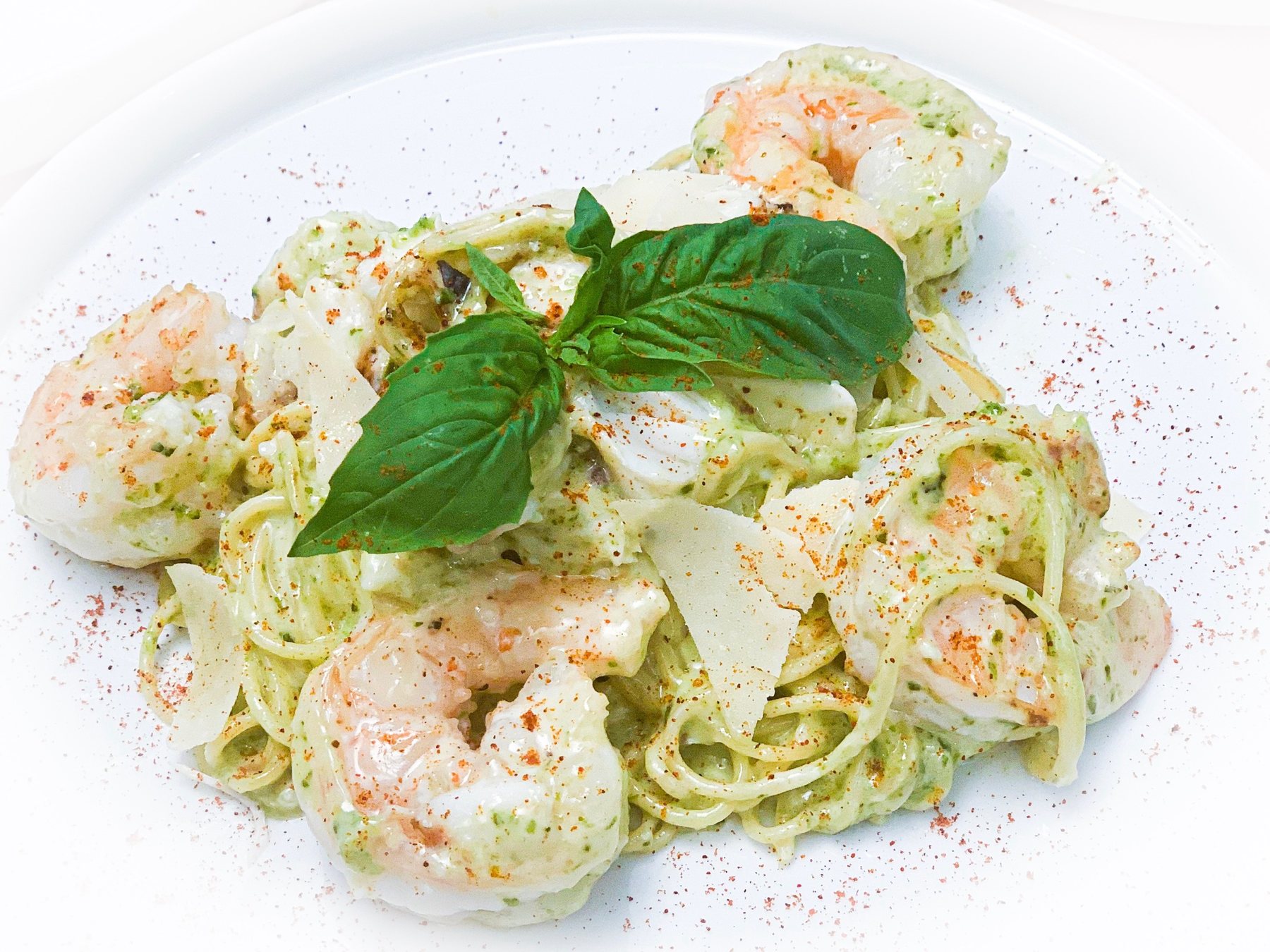
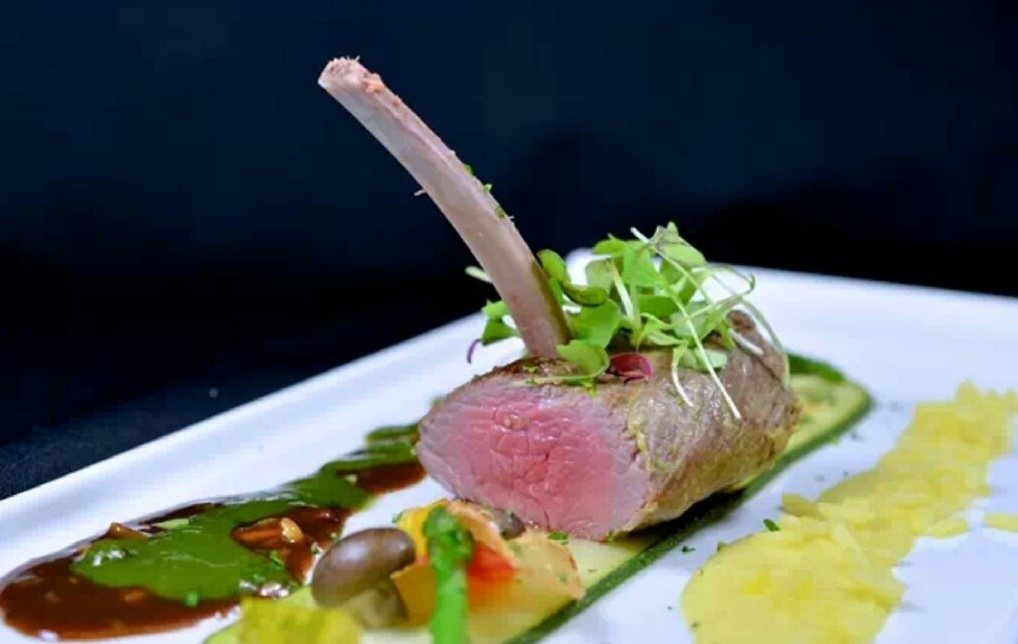
- Composition, negative space and sauce work
- The part most home cooks never learn
- Sit down to what you made
- Properly plated

Questions he gets asked
How many people can join?
One to twelve. Above twelve it stops being hands-on and becomes a demonstration, which is not what this is.
Do we need a professional kitchen?
No. A normal domestic kitchen works for most groups. He will tell you honestly if your space limits the group size.
Is the online version live?
Yes, run live rather than pre-recorded, so you can ask questions while you cook.
Can I buy this as a gift?
Yes, and it is one of the more common reasons people book it. Gift certificates available.
Does it work for corporate team building?
It works well. People who will not talk in a workshop will talk over a chopping board.
Classes are limited each season
Tell him the group size and what you want to get better at.
Reserve a class